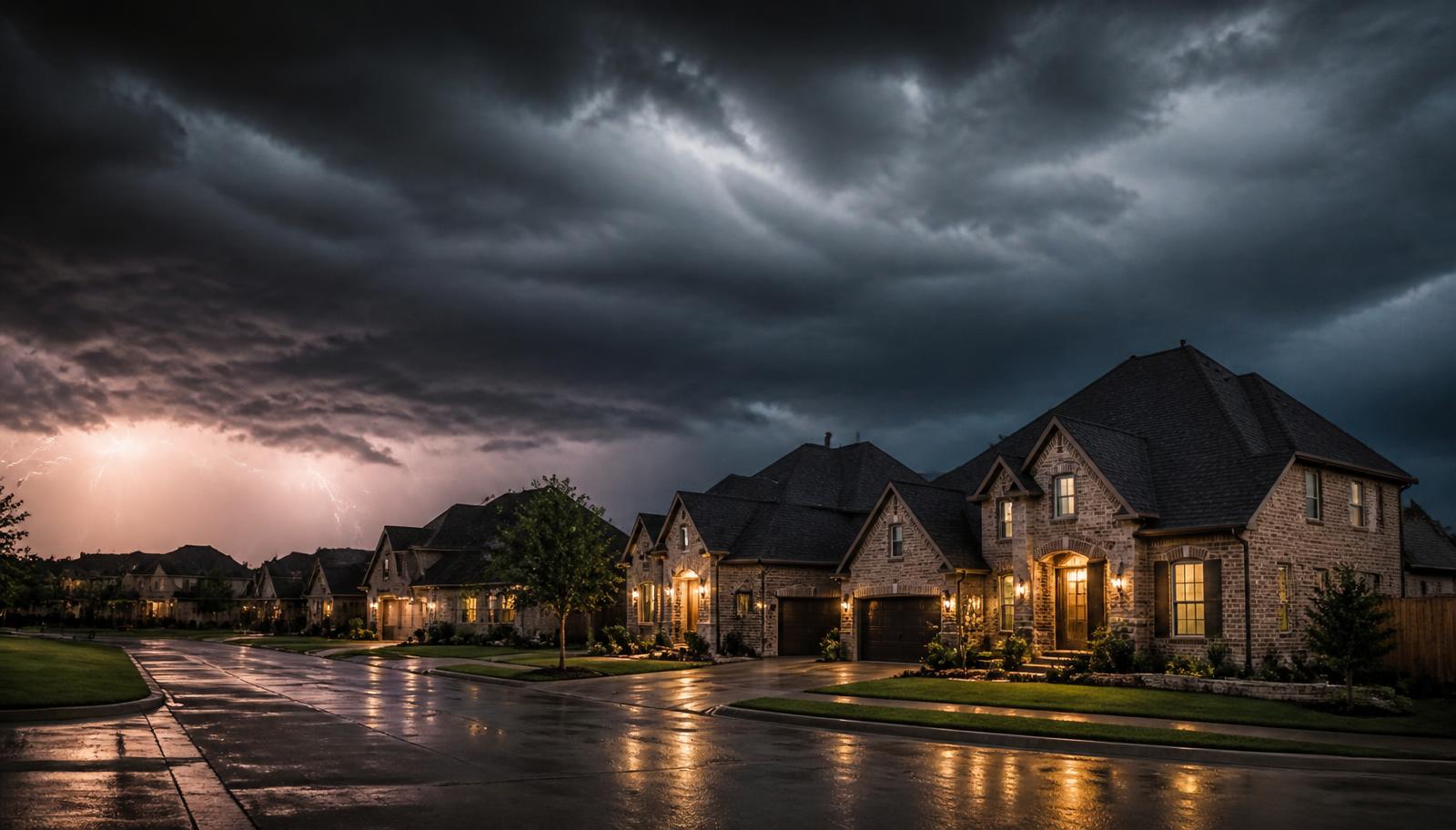
The Most Hail-Prone Areas in DFW
Some DFW cities take far more hail damage than others. Here's a look at the patterns and what it means for your roof.
Dallas-Fort Worth sits squarely in 'hail alley' — the part of North Texas where supercell storms regularly produce damaging hail every spring. But not every DFW city gets hit equally.
Highest Hail Frequency
Cities along the I-35 corridor and southern Dallas County — Waxahachie, Midlothian, Red Oak, Glenn Heights, DeSoto, Cedar Hill, Duncanville, and Lancaster — see some of the highest hail frequencies in the metroplex. Spring storms moving north from Ellis County drop hail consistently here.


Tarrant County Wind & Hail
Fort Worth, Arlington, Mansfield, and the western edge of DFW catch the leading edge of most storm systems pushing in from the west, producing both hail and damaging straight-line wind events.
What It Means For Your Roof
If you live in any of these zones, plan on at least one insurance-eligible storm event every 5-7 years. Class 4 impact-resistant shingles or standing-seam metal often pay back through reduced claims and insurance discounts.
Whether your home is in Waxahachie, Plano, Fort Worth, or anywhere in DFW, Max Exteriors documents storm damage thoroughly and works with all major Texas insurance carriers. Free inspection: (469) 779-7325.
Storm Damage Resources Near You
Keep Reading
What To Do After Hail Damage in DFW
A hailstorm just rolled through your neighborhood. Here's exactly what to do — in order — to protect your home and your insurance claim.
EducationRoof Repair vs Roof Replacement: How To Decide
Repair or replace? Here's a practical framework for DFW homeowners deciding what to do with an aging or storm-damaged roof.
InsuranceHow Roof Insurance Claims Work in Texas
RCV, ACV, deductibles, supplements, and recoverable depreciation — finally explained in plain English for Texas homeowners.